
Learning from Nature: Exploring Permaculture and Sustainable Living
- For Renewal Environmental Association

- May 21, 2025
- 2 min read
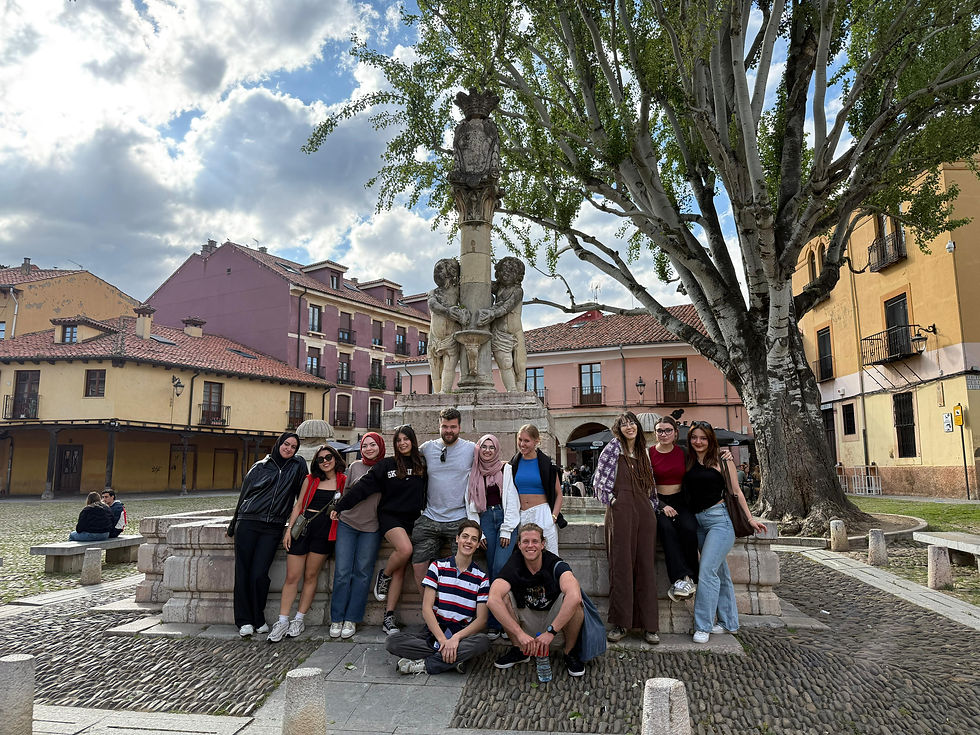

The Erasmus+ Mobility of Youth Workers project "Legacy of the Soil: Sustainable Agriculture and Safe Food" (Project No. 2024-3-ES02-KA153-YOU-000260774) took place in Gijón, Spain, from 28 April to 5 May 2025, under the coordination of Generaciones Saludables España. Bringing together youth workers from Turkey, Spain, Hungary, Poland, and Iceland, the project promoted sustainable agriculture, safe food systems, and environmental responsibility through non-formal education. As the Hungarian partner organization, For Renewal Environmental Association actively contributed to the implementation of educational activities that strengthened international cooperation while equipping youth workers with practical approaches to sustainability.
Participants reinforced their knowledge of climate change, organic agriculture, healthy nutrition, and safe food through dynamic teamwork challenges designed to transform learning into an engaging experience. Interactive word-search activities encouraged collaboration, communication, and problem-solving as participants worked together to reconstruct meaningful messages about food security and environmental protection. These exercises demonstrated how non-formal education can make complex sustainability topics more memorable while strengthening teamwork and critical thinking skills.
Environmental awareness was further developed through cycling workshops and educational sessions introducing the core principles of permaculture. Participants explored how caring for the Earth, using resources responsibly, and sharing surplus production contribute to sustainable communities and resilient food systems. Discussions supported by visual materials encouraged participants to reflect on practical ways of applying permaculture principles in everyday life, youth work, and local environmental initiatives.
Creativity played a key role in the learning process as participants transformed recycled paper into handmade sculptures, demonstrating how waste materials can be given a new purpose through innovation and imagination. Simulation games focusing on ecosystem balance and species adaptation provided another practical perspective on environmental sustainability, helping participants understand how climate change affects biodiversity and natural systems. These experiential activities strengthened environmental literacy while improving creativity, analytical thinking, and collaborative decision-making.
The mobility also fostered intercultural dialogue by providing opportunities for participants to share their countries' agricultural traditions, local products, environmental practices, and cultural heritage. Reflection sessions encouraged youth workers to evaluate their learning outcomes and identify ways to transfer newly acquired knowledge into future educational activities. By combining environmental education, practical sustainability skills, creative expression, and international cooperation, the project empowered participants to become more effective promoters of sustainable living within their organisations and local communities.


